Menu Close

Uncategorized

Making preserves out of history

(Originally published in the now-defunct Twin City Sentinel.)

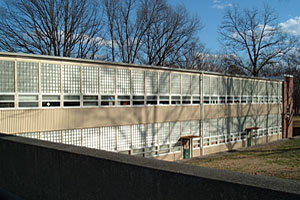
They’re going to tear down Moore School on Knollwood Street. Funny thing is no one seems to care, even here in presevation-minded Winston-Salem? How can this be, you ask?

How indeed?

An unfortunate truth in Winston-Salem, just as in most other places, is that “historic presevation” all too often means “preservation of cute buildings that look really old, no matter when they were actually built.” If this school had been built twenty years earlier in some faux Colonial motif, people would be falling all over each other trying to save it. But a unique and significant modernist structure — something with a style that was actually current at the time when it was built, heaven forbid — doesn’t stand a chance.

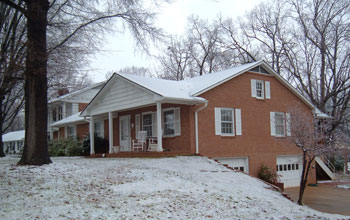
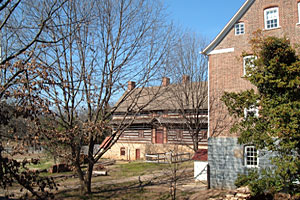
Evidently, historic preservation looks like this:
But not like this:
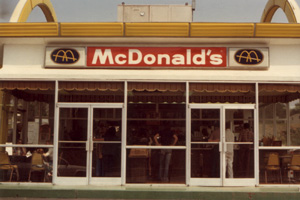
You might be interested to discover that there’s a very good chance that the second building in the sequence (a 1950s style McDonald’s on Corporation Parkway, demolished in the 1980s) may actually be older than one of the structures in the first photo.

You see, the first two buildings are from the Old Salem restoration project, a “living history” museum featuring several pre-1850 buildings and probably almost as many reconstructions of pre-1850 buildings. Like Colonial Williamsburg, Old Salem was once an integral part of Winston-Salem, with buildings of varying ages and styles. Many very old structures had been spared the wrecking ball since a large part of the neighborhood was owned by the Moravian Church. However, many of these buildings had been altered over time, and there was also significant infill.

Starting in the 1950s, Old Salem went the “historic district” route, with an appearance commission, restrictive covenants, and more. Very simply, it became a museum, the goal of which was to obliterate any evidence that time had passed. As such, it became impossible to tear anything down in the historic district. Impossible, that its, unless it happened to be a structure built after about 1850. In that case, any building, no matter how architecturally significant, could, and in fact would eventually be destroyed. In addition, any changes made to the exteriors of these buildings were removed, leaving (in many cases) little but new construction based on old pictures and plans.

I call it the “sledgehammer approach” to historic preservation. While the practitioners’ hearts may have been in the right place, this approach has been almost as destructive as the 1960s urban renewal programs were. It’s taken what could have been one of the most interesting neighborhoods in Winston-Salem and turned it into something of a dead zone, trapped in time, with no hope of escape or evolution. Unless you’re a resident (which means you kicked in some serious cash), or on a field trip, or doing research, or showing it to visitors, there’s really no compelling reason to go to Old Salem. It’s very cute and scenic and photogenic, but there’s just not much going on there.

I don’t like historic districts that have been turned into museum exhibits, stripped of any temporal context or change. Most aren’t as severe a case as Old Salem, but once the designation is applied, almost any such district takes on a certain pretentious aura, its residents trying to apply a past most urban neighborhoods never really had in their heyday, with imitation gaslights and decorative street signs, and overpriced paving stones.

And every house must be from the same decade, dammit. Or at least must look the part. By the way, only houses are allowed to begin with.

I now present my own rules for historic preservation,  the ones that will take effect when I am declared emperor:

  • History did not end at the turn of the last century. Many important things have happened since then, and many of these things happened in equally important buildings that were built since then.
  • Neighborhoods and cities change over time. Single-era neighborhoods are generally a trifle boring when all is said and done. To ignore evolution is not to preserve history, but to deny it.
  • Buildings change over time as well. The 1950s modern façade that was added to the lower level of the 1920s office building is as much a part of that building’s history as is the original façade, and sometimes more. Additions and modifications should at least be considered for preservation, and not be automatically dismissed.
  • Commercial buildings, even small ones that may have contained mundane things like grocery and drug stores, are every bit as worthy of preservation (if not more so) than grand structures that most “common people” never visited when they were new. These “everyday” structures are the ones people remember, and can often tell us much more about life in the past than some mansion on a hill.
  • Priority should go to (a) buildings that are unique, (b) buildings that can be rehabilitated for some useful purpose, (c) buildings that have some physical relationship to the time in which they were built, and (d) buildings where something important happened — although my definition of “important” may differ from yours.

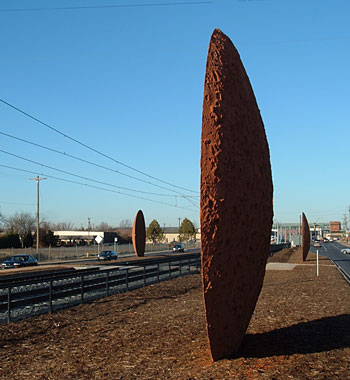
Public art

What is this obsession Charlotte has with vaguely ridiculous-looking disc-shaped public art projects? First, there was the giant sand dollar thing at Trade and Tryon, then the interlocking onion rings at Wendover and Randolph, and now this new (cough) installation, which can only be described as some sort of cubist primitive version of Stonehenge on South Boulevard: Charlotte’s own mysterious homage to the mythical power of the contact lens.

It’s really bad. There are like eight of these things spaced along two sides of the new light rail line in a particularly ugly stretch of South Boulevard. Suffice to say, they add nothing whatsoever to the aesthetics other than to offer passing commuters a little chuckle thinking of the swindler who got paid for the damned things.

I’d like to think these projects are maybe rooted in some sort of resentment of public art requirements, but I fear that’s not the case. Even more, I fear that someone actually took this merde seriously.

The geekiest pornography store ever

As we move farther and farther into the internet age, the idea of a pornography store in general is beginning to sound just a bit anachronistic. Le Salon on Polk Street, though, was the pornography store to end all pornography stores. I’ve never seen anything comparable, before or since.

To start with, there were no booths. Le Salon was strictly a takeout operation. It was obvious that their mission was to concentrate on the actual videos rather than the, ummm, incidentals that come with the standard sodomite porn emporium. In other words, there was no shagging in the back room.

But man, did they concentrate on the video. This place was huge, they had everything, and it was all organized: by fetish, by studio, and even by director. They even had cross-reference cards. It really inspired the future librarian in me, and it also really allowed me to develop my collection of pirated porn on VHS.

Le Salon closed around 1997 or 1998 as I recall. Apparently, the owner of the building had a much purer vision of some proposed Lower Polk renaissance that didn’t include a big, geeky pornography store. I was reduced to using the rather lackluster outlets on Folsom Street near my apartment, and video smut was never quite the same for me again.

5 October 1992: The arrival

I arrived in San Francisco on a Monday afternoon, a week after I’d left my family and most of my friends back in North Carolina. It was my first cross-country drive, and the first time I’d seen much of anything between the Appalachians and the Sierra Nevada. My friends had been amazed that I would take such a trip completely alone. I responded that I couldn’t have imagined doing it any other way.

I very much regret not keeping a journal nor any real notes on that trip. I’ve forgotten a lot of the specifics, but there are a few things I’ll always remember:

  • Having to pull off the freeway just a few minutes after I got on it in Greensboro, because I began sobbing uncontrollably.
  • Stopping at the Kinko’s in Nashville to fax my former co-workers at the Kinko’s in Greensboro.
  • Not being able to get a room at the Motel 6 in Kansas city and being horrified that I had to spend almost forty dollars to stay at the EconoLodge across the street.
  • Also in Kansas City, ditching some boy in a bar who was kind of cute but was giving me the creeps.
  • Deciding to spend not one, but two extra days in Denver, just because I liked it so much. I even hooked up my VCR in the motel room.
  • Finding a cassette copy of Laurie Anderson’s Big Science in a thrift store outside Denver, and thinking that was a really good sign.
  • Driving across the Rockies for the first time, with my car full of stuff, and comparing the experience to The Long, Long Trailer.
  • Walking into a bar in Salt Lake City and immediately running into the same boy I’d ditched in Kansas City four nights earlier. And having to ditch him again.
  • My last night on the road, in Winnemucca, where I got what would be my last good night’s sleep for several weeks and bought supplies (and a bottle of lotion I’d have for years to come) at my very first Raley’s supermarket.
  • Stopping at the Kinko’s in Reno to fax Steve and Todd, my soon-t0-be roommates in San Francisco, neither of whom had answered the phone for the past two days.
  • Stopping at the Target in Vallejo to call them again, and being relieved that one of them finally answered the phone this time.
  • Finally landing in San Francisco at the Market Street Safeway (I picked my landmarks very carefully even then, thank you) where I called for final directions to my new home.

I was pretty exhausted upon arrival, especially after driving around in circles trying to park in the Civic Center area. So (of course) we went out drinking on Polk Street that night. I didn’t have to start work until Wednesday, so I think we drank a lot.

Videolog: Detachable Penis


Detachable Penis
King Missile, 1992

I vaguely remember meeting one of the members of King Missile on New Year’s Eve, 1993. I think it was at the Lone Star. I’m not sure, because I was exceedingly drunk that night, as was my customary practice at the time.

I’d loved the band ever since the first time I heard “Jesus Was Way Cool” several years before, and I thought it was really cool that they finally had something of a hit. At least on Live 105, back when it used to not suck.

San Francisco nostalgia

This post was written upon the launch of an unsuccessful attempt at bring Planet SOMA back to life:

I’ve always been nostalgic about San Francisco.

I don’t mean that I’m nostalgic about it now that I no longer live there, nor that I “miss” it, per se. Actually, I was even nostalgic about San Francisco when I was still a resident. I was nostalgic for a San Francisco I never got to see, one whose existence — assuming it ever existed at all — concluded long before I arrived on the scene. I’m talking about the 1950s San Francisco of Herb Caen, martinis, Trader Vic’s, and little neighborhood Safeway stores in the middle of the block with no parking lots. And maybe even the San Francisco of the 1970s, with the relaxed attitude toward sex and cute shaggy-headed boys running around everywhere.

I moved to San Francisco in October of 1992. The city and the state weren’t in top form; there was a recession, and a string of well-publicized disasters starting with the 1989 Loma Prieta earthquake and ending with the 1992 LA riots had scared much of the country out of ever wanting to live in California. But not me. After 28 years in North Carolina, I was ready for something a bit more urban. And 1992 was an amazing time for a sodomite with somewhat non-mainstream tastes to move to San Francisco.

It’s that long gone San Francisco of the early 1990s that I sometimes miss these days. I have pretty much no use for the current incarnation of the place, and I’m happy as can be that I no longer live there. That may have as much to do with my own growth and perspective as it does with the actual changes the city itself has experienced. I’m no longer in my twenties, I no longer drink and carry on until all hours of the night, and I’m concerned about than sex, booze, and rock, and roll. In short, I may be missing my own youth more than I’m missing some idealized version of San Francisco in 1992. I grew out of both.

That said, it was a great place to be at that point in my life, and it’s the San Francisco of the 1990s that this new incarnation of Planet SOMA will be all about. I’ll be posting about whatever I’m thinking about on any given day: stories from my own past, music videos, photos, random news stories from the era, memories of sex clubs and bars and places that no longer exist, and even the birth of the internet. You never know what you might find here.

In a sense, it will be like some of the earlier versions of Planet SOMA, dating back to its birth in January of 1996. In case you’re new to the site, here’s a crash course in Planet SOMA History:

Version 1 lasted for roughly two and a half years, from January 1996 to August 1998, and featured commentary on South of Market nightspots, sex clubs, and history, and also included road trip journals and occasional rants on miscellaneous subjects…not to mention the occasional dirty picture. The focus was on my neighborhood, the area south of Market Street in San Francisco, an area dubbed “SOMA” by any number of hipsters and real estate speculators.

Version 2 was launched in August 1998, and added a semi-regular web journal to the mix, which by this time didn’t feature sex clubs or porn anymore. The rants became more prominent and more varied. By late 2000, I’d split most of the personal material (the journal, and all my assorted “bio” pages) into a separate site, Otherstream.com, which eventually resulted in Planet SOMA Version 3, a site which mostly contained rants about my growing impatience with the city by the bay.

Version 4 was finally launched in early 2004, once pretty much all the old content had either been retired or moved to Otherstream. I’d almost given up on the old site, as I was increasingly frustrated with San Francisco (and soon to escape for good) and didn’t quite know what to do with it. I thought this new incarnation as a photo site would inspire me to do regular updates. I did exactly four updates before moving back to North Carolina in 2005 and putting Planet SOMA into a stasis chamber.

Welcome to Version 5. We’ll see where it goes.

Music? With Video?

Interesting interview tidbit from a 1981 Hall & Oates syndicated radio interview that was in today’s “to digitize” pile. The subject is music video, and the potential effects of a just-announced music video channel on cable.

And yes, that does mean that I possess several disks full of syndicated shows like “The BBC College Concert” and “Rock Over London” from my radio days, all of which were supposed to be destroyed right after they aired. You wouldn’t begrudge me a moderately rare Lords of the New Church live performance and the occasional interview with a long-forgotten Britpop star, would you?

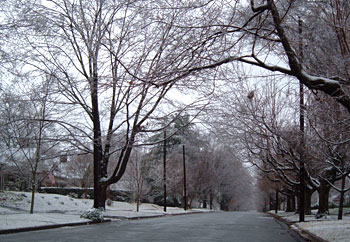
Snow comes to Winston-Salem

It wasn’t major, but it was the first relatively decent snowfall I’ve seen since moving back east two and a half years ago. Which sort of sucks. I remember when I was a kid that we always got a couple of fairly good snowstorms every winter, usually in the 3-4 inch range and very often more than that. Come to think of it, it seems like we even used to get one every time I came home to visit when I was living in San Francisco.

I guess we’re in a bit of a warm phase now. Maybe it will go away soon.